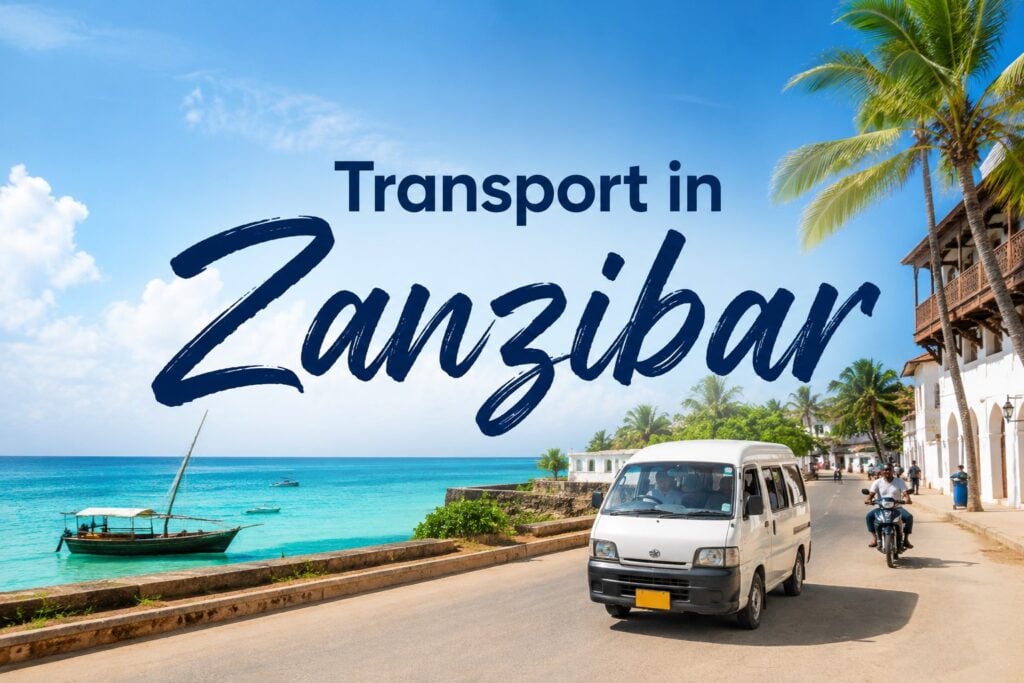
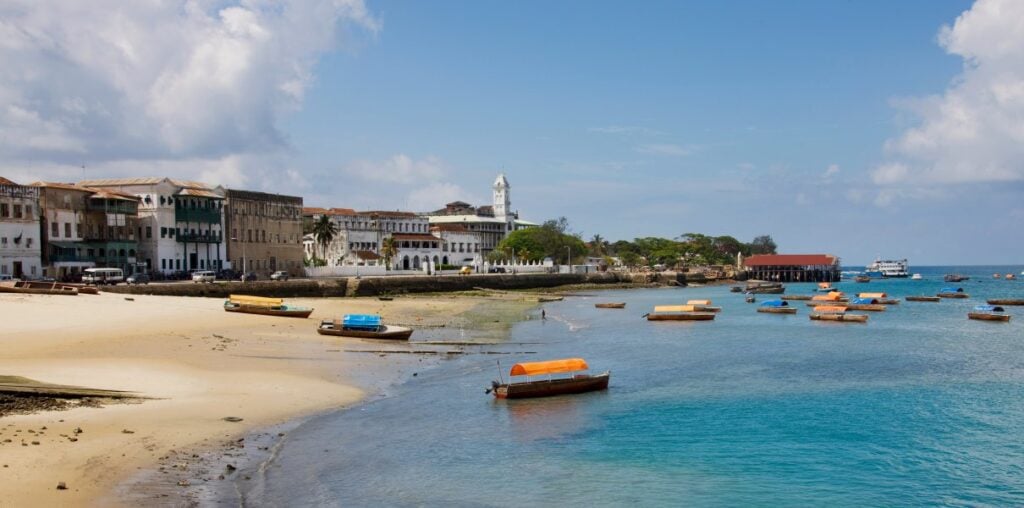
Zanzibar doesn’t have trains, trams, or Uber. There’s no metro to fall back on and no single “correct” way to get from the airport to your hotel. Instead, getting around the island means choosing between taxis, dala dalas, private drivers, rental cars, and the occasional dhow — and the right choice depends entirely on where you’re staying, what you’re doing, and how much time you have.
This guide pulls together what real travelers, residents, and tour operators say about getting around the island — from Reddit threads and Facebook expat groups to local shuttle operators — and adds something most travel blogs skip entirely: how transport connects to where you choose to stay or invest. As a real estate agency operating on the ground in Zanzibar, Coldwell Banker® sees this question from a different angle than a typical travel site, because for our clients, transport isn’t just about a week’s holiday — it’s a daily reality that affects property value, rental income, and quality of life.
Understanding Transportation in Zanzibar
Zanzibar’s road network has improved steadily over the past decade, with the main route connecting Stone Town to the northern beaches (Nungwi and Kendwa) and the eastern coast (Paje, Jambiani, Matemwe) now well paved. Once you leave the main arteries, though, roads narrow quickly, lighting disappears at night, and potholes are common — especially during and just after the rainy season (March–May and, to a lesser extent, November).
A few realities first-time visitors should know before they arrive:
- There are no ride-hailing apps like Uber or Bolt operating reliably across the island, so most transport is arranged in person, through your hotel, or via WhatsApp with a known driver.
- Google Maps travel times are often optimistic. Traffic around Stone Town, road conditions, and frequent stops on shared transport mean journeys regularly take longer than the map suggests.
- Distances that look short on a map can take 45–90 minutes by road, because Zanzibar’s main roads funnel through Stone Town rather than running directly between coastal towns.
- Cash (Tanzanian shillings) is still the default for taxis, dala dalas, and small operators, even though card payments are increasingly available at hotels and larger services.
Quick Comparison of All Transport Options
| Transport | Best For | Typical Cost | Comfort | Safety | Availability |
|---|---|---|---|---|---|
| Taxi (street/hotel) | Short trips, flexibility | Moderate–High (negotiated) | Good | Good if pre-arranged | High in tourist areas |
| Pre-booked shuttle/taxi | Predictable pricing, airport transfers | Moderate | Good (AC, set seats) | High | Booked in advance |
| Rental car | Independence, multi-stop days | Moderate (plus fuel/insurance) | Good | Moderate (road conditions, driving style) | Widely available |
| Private driver | Families, business, property viewings | High | Very good | High | Bookable through hotels/agencies |
| Dala dala | Budget travel, local experience | Very low | Basic, crowded | Moderate (valuables, crowding) | Frequent on main routes |
| Bajaji (tuk-tuk) | Very short local trips | Low | Basic | Moderate | Good in towns |
| Water transport (dhow/ferry) | Island-hopping, Stone Town–Pemba | Varies | Varies | Good with reputable operators | Seasonal/route-dependent |
Taxi Services in Zanzibar
Taxis remain the most popular option for visitors because they offer door-to-door convenience without the planning a rental car requires. There are a few different flavors:
Airport taxis wait outside Abeid Amani Karume International Airport and are usually the most expensive per kilometer, since they cater to arriving tourists with no other options yet.
Hotel taxis are arranged through your accommodation. They cost more than flagging a car on the street, but the trade-off is accountability — your hotel has a relationship with the driver and a reputation to protect.
Street taxis in Stone Town and other towns are the cheapest if you’re comfortable negotiating, but fares vary enormously from one driver to the next.
A consistent theme across traveler discussions — Reddit’s r/zanzibar community, Facebook expat and travel groups, and operator sites alike — is that Zanzibar taxis don’t use meters, so the fare is whatever you and the driver agree on before the journey starts. This means overcharging tourists is common enough that most experienced visitors recommend agreeing on a price before getting in the car, and asking your hotel or a local contact what a fair price looks like beforehand. Pre-booking with a set-rate operator removes this uncertainty entirely, which is why services that let you lock in a price online have become popular with first-time visitors.
Practical tips travelers consistently share:
- Always confirm the fare before the journey begins, not on arrival.
- Ask your accommodation for a realistic price range before negotiating with a street taxi.
- Keep small denominations of cash on hand; drivers often “don’t have change” for large notes.
- For airport pickups, booking in advance (through your hotel or a transfer company) removes the haggling entirely and is worth the small premium for peace of mind.
Renting a Car in Zanzibar
Renting a car is the option that divides opinion most sharply among travelers. Some swear by the freedom it gives them to explore beaches and spice farms at their own pace; others find the driving conditions stressful enough that they wish they’d stuck to taxis.
What you need to know:
- Licensing: An international driving permit is generally required alongside your home license.
- Road conditions: Main routes are reasonably maintained, but side roads can be sandy, potholed, or unlit at night.
- Driving style: Local driving customs — overtaking on blind corners, livestock and pedestrians on the road, minimal lane discipline — catch many first-time visitors off guard.
- Police checkpoints: These are routine on Zanzibar’s main roads. Carry your license, permit, and rental documents at all times.
- Fuel and parking: Fuel stations are common on main routes but sparser inland; parking in Stone Town’s narrow alleys can be genuinely difficult.
Who should rent: Confident drivers planning multi-stop trips, longer stays, or frequent travel between the same few points (for example, commuting daily from a rental villa to Stone Town).
Who shouldn’t: First-time visitors on a short trip, anyone uncomfortable with unfamiliar road rules, or travelers who only need point-to-point transfers — a private driver or taxi will usually be less stressful and not much more expensive once insurance and fuel are factored in.
Private Drivers
Hiring a private driver for the day, or for your whole trip, sits between a taxi and a full rental car. You get the flexibility of door-to-door, on-demand travel without having to navigate yourself.
This option tends to suit:
- Families traveling with children or a lot of luggage
- Luxury travelers who want a known, vetted driver and air-conditioned vehicle
- Business travelers and property investors viewing multiple villas or plots in a single day, since a private driver can comfortably manage a multi-stop itinerary across different parts of the island
For Coldwell Banker® clients touring properties in Nungwi, Paje, and Stone Town in the same trip, this is consistently the most practical option — it removes the logistics of navigation and negotiation from a day that’s already packed with viewings.
Public Transport (Dala Dala)
The dala dala is Zanzibar’s privately operated shared minibus system, and it’s the most authentic — and most affordable — way to experience local life on the island.
A few realities worth knowing in advance:
- There’s no fixed timetable. Dala dalas depart when full, not at a set time.
- Fares are paid on board, not in advance — and you should pay the same rate as locals (a very small sum in Tanzanian shillings), not an inflated “tourist price.”
- Most routes funnel through Stone Town, so a journey between two coastal towns (say, Nungwi to Jambiani) can require two or three separate dala dalas and a fair amount of patience.
- Luggage space is limited; large bags often end up on the roof or up front with the driver.
- Crowding and casual seating arrangements (more passengers than seats is normal) mean valuables should be kept close and out of sight.
Dala dalas aren’t the right choice if you’re short on time, traveling with significant luggage, or making a single one-off airport transfer — but for budget travelers and those wanting a genuine slice of local life, they’re hard to beat.
Airport Transfers
Abeid Amani Karume International Airport sits just outside Stone Town, and transfer options scale with budget and planning:
- Pre-booked private transfers offer the most predictable experience: a driver meets you at arrivals with a fixed price agreed in advance.
- Hotel-arranged transfers are convenient and reliable, usually at a modest premium over a street taxi.
- Airport taxis are available on arrival but tend to be the most expensive option and require negotiation.
- Shared shuttle services (AC minibuses running between the airport and popular tourist areas) are a middle-ground option — more affordable than a private transfer, more comfortable than a dala dala.
As a rough guide to travel times from the airport: Stone Town itself is a short 15–25 minute drive, while the northern beaches (Nungwi, Kendwa) typically take 1.5–2 hours, and the eastern coast (Paje, Jambiani) around 1–1.5 hours, depending on traffic and road conditions.
Transport Between Popular Destinations
| Route | Approx. Distance | Approx. Travel Time | Notes |
|---|---|---|---|
| Stone Town → Nungwi | ~60 km | 1.5–2 hours | Direct dala dala available; taxi/private driver faster |
| Stone Town → Paje | ~50 km | 1–1.5 hours | Direct dala dala available |
| Airport → Kendwa | ~65 km | 1.5–2 hours | Pre-booked transfer recommended |
| Airport → Jambiani | ~55 km | 1–1.5 hours | Pre-booked transfer recommended |
| Paje → Nungwi | ~45 km | 1.5–2+ hours | Usually requires changing vehicles via Stone Town on public transport |
| Matemwe → Stone Town | ~55 km | 1.5 hours | Private driver smooths multi-stop days |
Times vary with traffic, weather, and time of day — always build in a buffer, especially for flight connections.
Typical Transport Costs in Zanzibar
While exact prices shift with fuel costs, season, and negotiation skill, the relative cost ordering travelers consistently report is:
- Dala dala — the cheapest option by far, a few thousand Tanzanian shillings per local-rate journey.
- Bajaji (tuk-tuk) — low cost, best for very short hops within a town.
- Rental car — a daily rate plus fuel and insurance; economical for longer stays or multi-stop days, less so for a single transfer.
- Street/hotel taxi — moderate to high, and highly dependent on negotiation.
- Pre-booked shuttle or set-rate taxi — moderate, with the benefit of price certainty.
- Private driver (full or half day) — the highest per-day cost, but often the best value when multiple stops, comfort, or time savings matter.
Because fares move with fuel prices and season, treat any specific number as a starting point for negotiation rather than a fixed rate — and always confirm the price before you travel.
Is Transport in Zanzibar Safe?
Safety concerns raised most often by travelers and residents fall into a few clear categories:
- Overcharging, not danger. The most common complaint isn’t about physical safety but about price — tourists being quoted multiples of the local rate. Agreeing fares upfront and asking locals or your hotel for guidance largely solves this.
- Night travel. Roads outside the main towns are often unlit, and driving conditions deteriorate considerably after dark. Arranging transport in advance for evening journeys is widely recommended over hailing transport on the spot at night.
- Road quality and driving habits. Narrow roads, livestock, pedestrians, and inconsistent lane discipline mean self-driving requires more attentiveness than visitors from countries with strict lane regulation may expect.
- Police checkpoints. These are routine rather than alarming — keep your documents accessible and you’ll pass through without issue.
- Valuables on public transport. Dala dalas in particular call for sensible precautions: keep bags close, avoid displaying phones or cash, and don’t pay until the journey is underway.
Overall, transport in Zanzibar is considered safe by the overwhelming majority of travelers and residents, provided you take the same common-sense precautions you’d use in any unfamiliar destination — confirm prices, avoid unnecessary night travel on back roads, and choose reputable, recommended operators.
Which Transport Option Is Best for You?
Couples — A mix of pre-booked airport transfers and the occasional private driver for day trips strikes a good balance of comfort and cost.
Families — Private drivers are worth the premium; they remove the stress of luggage, car seats, and unpredictable shared transport.
Budget backpackers — Dala dalas and bajajis offer the cheapest way to see the island, with the trade-off of slower, less predictable journeys.
Luxury travelers — Pre-arranged private transfers and drivers, often coordinated directly through your resort, are the standard expectation.
Digital nomads — A rental car or a trusted long-term driver arrangement makes the most sense for those moving between co-working spaces, cafés, and accommodation regularly.
Expats — Many residents eventually rent or buy a vehicle once they’re settled, since daily reliance on taxis or dala dalas becomes impractical for errands, school runs, and work commutes.
Property buyers and investors — A private driver for viewing days is almost always the better choice, since it allows you to focus on evaluating properties rather than navigating unfamiliar roads between viewings across different parts of the island.
How Your Accommodation Location Affects Transport
This is the question travel blogs rarely answer well, and it matters just as much for a week’s stay as it does for a long-term move or investment.
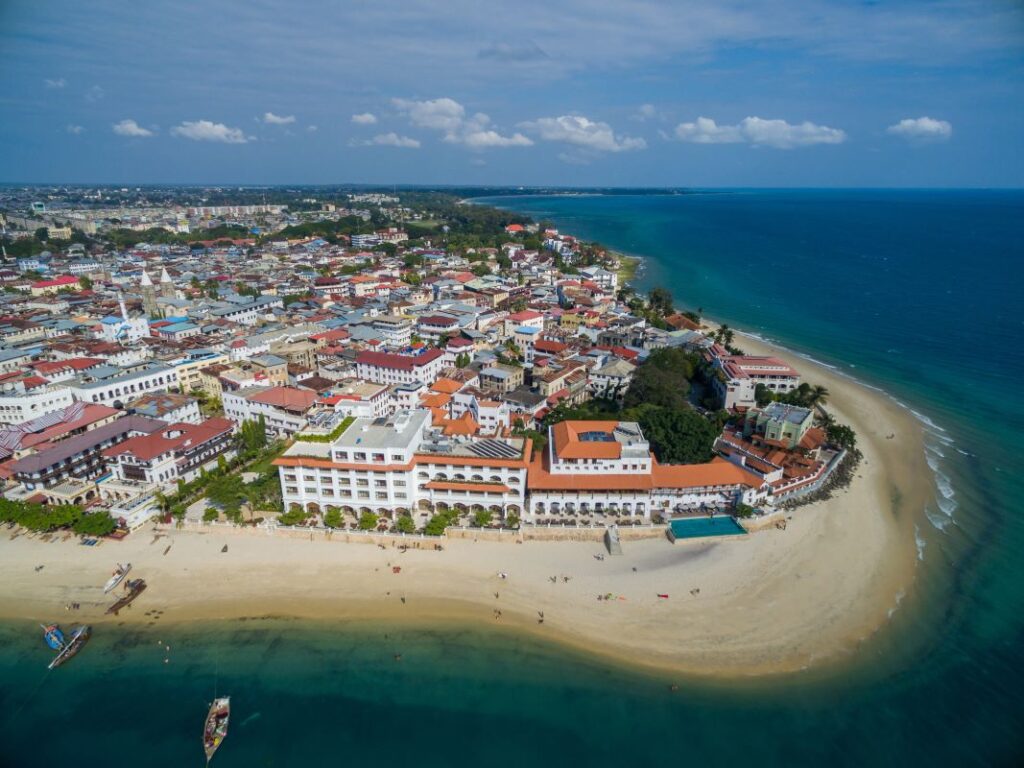
Stone Town offers the most transport convenience on the island — it’s the dala dala hub, has the highest concentration of taxis, and sits closest to the airport (15–25 minutes). Daily errands, dining, and short trips are easy without a car.
Nungwi and Kendwa, in the north, are popular beach destinations but sit furthest from the airport (1.5–2 hours), meaning transport planning matters more for arrival day and any day trips back toward Stone Town.
Paje and Jambiani, on the east coast, offer a more relaxed pace with reasonable access to Stone Town (1–1.5 hours) but limited direct routes to the north without passing through Stone Town first.
Matemwe, on the northeast coast, balances beach access with a moderate distance from Stone Town, though local road quality varies by season.
Fumba, southwest of Stone Town, has grown as a residential and investment area partly because of its relative proximity to Stone Town and the airport compared to the more remote beach zones.
For visitors, this means the “best” base isn’t necessarily the most scenic one — it’s the one that matches how much time you’re willing to spend in transit each day. For property buyers, it’s an even bigger factor: daily transport convenience affects rental demand, resale value, and simple quality of life for residents or guests. A villa in Paje with strong rental appeal but a 90-minute commute to Stone Town suits a different buyer than a Stone Town apartment where everything is walkable.
Choosing the right property location can meaningfully reduce both transportation costs and daily travel time — whether you’re visiting for a week, relocating to the island, or building a rental portfolio. If you’re exploring residential, villa, or investment opportunities in Zanzibar and want a clearer picture of how location affects day-to-day convenience, Coldwell Banker® Tanzania’s local team can walk you through the trade-offs for each area.
Frequently Asked Questions
Is Uber available in Zanzibar? No. There is no reliable ride-hailing app coverage across the island. Transport is arranged through hotels, pre-booked operators, or in person.
Can tourists drive in Zanzibar? Yes, with an international driving permit alongside your home license. Road conditions and local driving customs mean it suits confident, attentive drivers more than first-timers.
Do taxis accept cards? Rarely. Cash in Tanzanian shillings is the standard for taxis, dala dalas, and most small operators, though larger hotels and pre-booked services increasingly accept cards.
Should I book airport transport in advance? It’s strongly recommended. Pre-booking removes price negotiation, guarantees a driver is waiting, and avoids the higher rates typically charged by taxis waiting at arrivals.
Can I use public transport with luggage? You can, but dala dalas have limited space — expect to pay extra for bags, and to see your luggage stowed on the roof or up front rather than beside you.
Is driving at night safe? It’s more challenging than daytime driving due to unlit roads outside main towns. Most residents and experienced visitors recommend arranging transport in advance for evening journeys rather than driving unfamiliar routes after dark.
How much cash should I carry? Enough Tanzanian shillings for several taxi or dala dala fares, plus a buffer for tips and small purchases — cash remains the default across most of the island’s transport options.
Final Thoughts
There’s no single best way to get around Zanzibar — only the option that fits your trip, your budget, and where you’re staying. Taxis and private drivers offer comfort and flexibility at a price; dala dalas and bajajis offer an authentic, budget-friendly local experience; rental cars suit independent, longer stays; and pre-booked transfers remove the guesswork from airport arrivals.
For visitors exploring a long-term stay, a relocation, or an investment opportunity, transport is worth thinking about from day one — not as an afterthought once you’ve already chosen where to stay. If you’d like to discuss how location, accessibility, and transport convenience factor into property decisions across Stone Town, Nungwi, Paje, Matemwe, Fumba, and beyond, the Coldwell Banker® Tanzania & Zanzibar team is based locally and happy to help you find a property that fits how you actually want to move around the island.