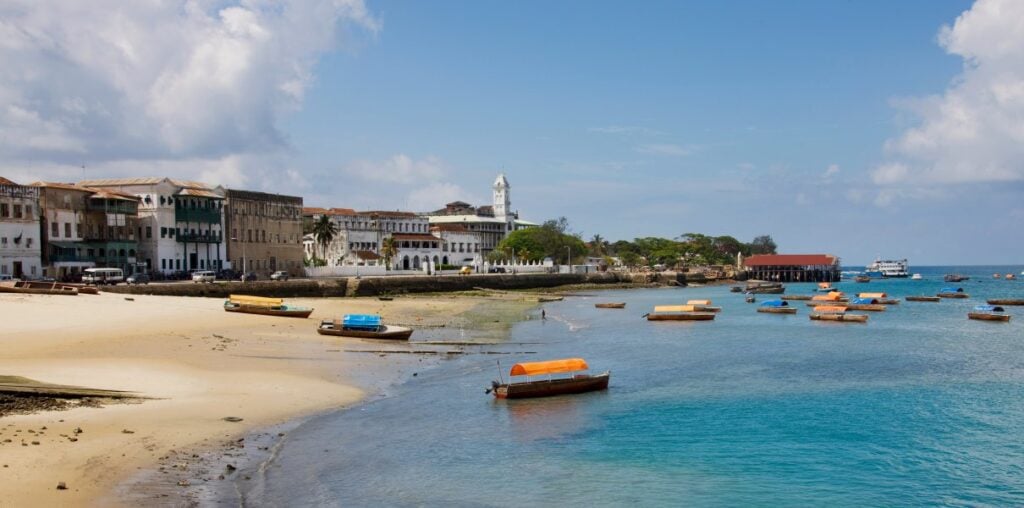
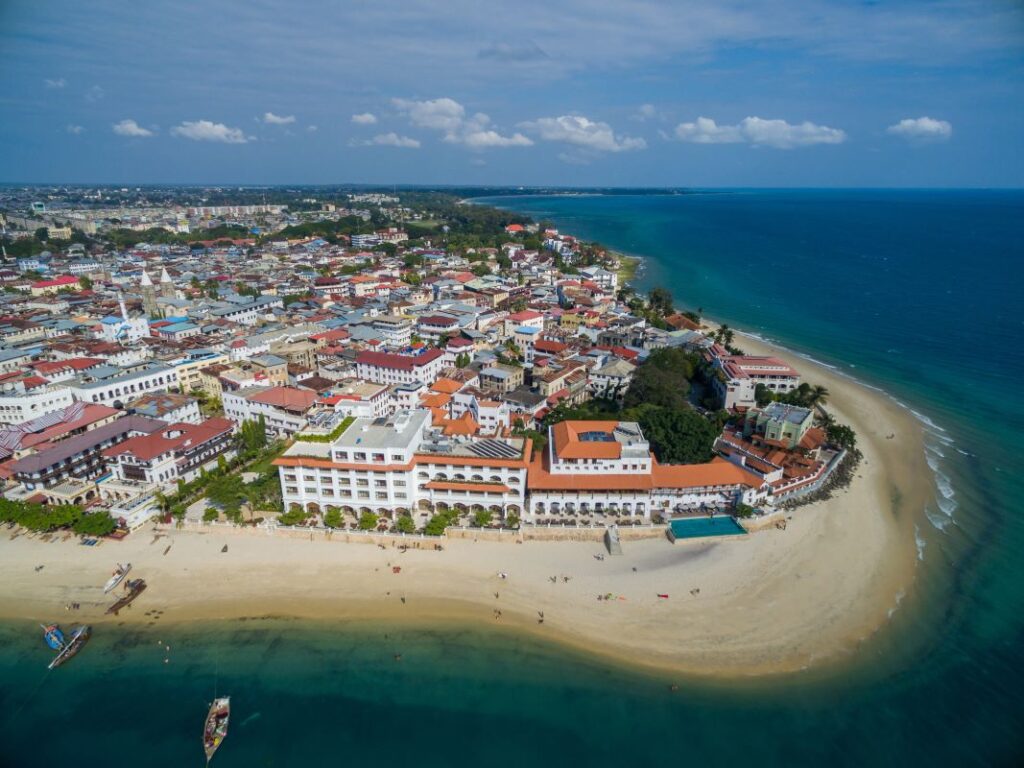
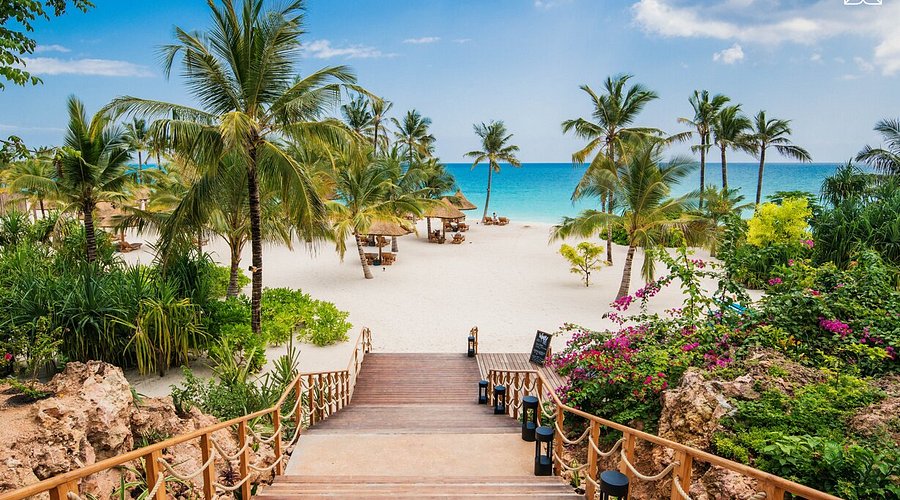
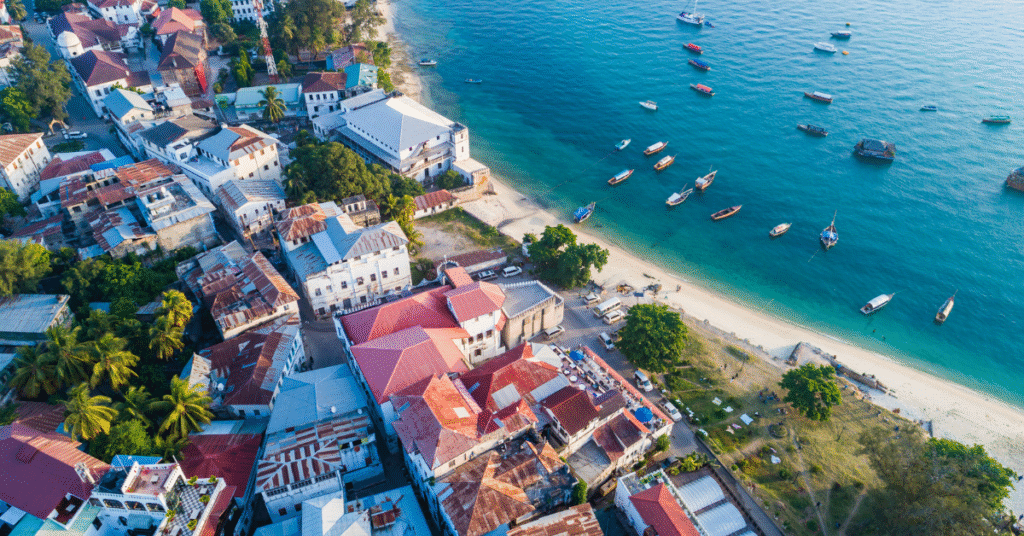
Zanzibar’s coastline has quietly become one of the Indian Ocean’s most talked-about property markets. Tourist arrivals hit a record 917,167 in 2025 — up sharply from just over 736,000 the year before — and the island is now on pace to cross the one-million-visitor mark. That surge in visitors, combined with a finite amount of shoreline, is exactly why beachfront villas, apartments, and boutique developments have become a serious topic for foreign buyers, not just holidaymakers.
This guide is written for people who are actually trying to make a decision: where to buy, what it costs, whether foreigners can legally own it, and what can go wrong. We’ve pulled together verified legal sources, current market pricing, and the honest, sometimes unflattering feedback that real buyers and long-term expats share in forums and community groups — not just polished listing copy.
Why Buy Beachfront Real Estate in Zanzibar?
A few forces are converging at once:
- Tourism is compounding, not plateauing. Zanzibar went from 260,644 arrivals in the pandemic trough of 2020 to nearly 918,000 in 2025 — and Europe alone supplied roughly two-thirds of visitors, with fast-growing interest from Poland, India, Israel, and China diversifying the visitor base.
- Shoreline is genuinely scarce. Coastal buffer rules (typically 30–100 meters from the shoreline, depending on the zone) restrict how much new beachfront can ever be built, which is part of why prices in Nungwi and Jambiani have risen 10–15% annually versus 5–7% island-wide.
- The lifestyle case is real, not just marketing. Warm water year-round, direct flights expanding from Europe and the Gulf, and a slower pace of life continue to draw retirees, remote workers, and second-home buyers.
- New government incentives are actively courting buyers. A 2026 investor programme now offers a residence permit for villa buyers (covering a partner and up to four children), reduced capital gains on a first resale, and no VAT on unit rental or sales for qualifying purchases.
None of this guarantees a good outcome for every buyer — see the Risks section below — but it explains why serious interest in Zanzibar real estate has moved well beyond backpacker tourism rentals.
Is Beachfront Property in Zanzibar a Good Investment?
The honest answer: it can be, but the returns you’ll actually see depend heavily on location, management quality, and how carefully the legal groundwork was done.
| Investment Factor | What the Data Shows |
|---|---|
| Price appreciation | 5–7% annually island-wide; 10–15% in prime beachfront spots like Nungwi and Jambiani |
| Rental yield | Gross yields of 12–18% on well-managed beachfront short-term rentals; net yields more realistically land around 8–13% after management fees, maintenance, and vacancy |
| Occupancy | Peak-season occupancy frequently tops 70–90% in resort areas |
| Scarcity | High — coastal setback rules and limited new beachfront supply (fewer than a few hundred new units in the pipeline through 2026) |
| Buyer profile fit | Vacation home, short-term rental income, boutique hospitality, retirement |
A word of caution that doesn’t show up in most marketing material: gross yield figures of 15–18% are the headline numbers agencies advertise, and they’re achievable in peak months — but they assume strong management, consistent bookings, and low vacancy. Buyers who talk to other owners consistently report that net returns, once you factor in a local property manager, marketing costs, generator fuel, staff, and off-season gaps, land meaningfully lower. Budget conservatively rather than underwriting a deal on the best-case number.
Best Areas to Buy Beachfront Property in Zanzibar
Nungwi & Kendwa (North Coast)
The most established luxury corridor — swimmable, current-free beaches year-round, a dense cluster of resorts, and the island’s highest price points. Beachfront land runs roughly $100–120 per m², with built villas trading between $2,200–3,000+ per m² and total prices from about $490,000 to $2.25 million. Best for buyers who want the strongest resale liquidity and the most built-out tourism infrastructure.
Paje (East Coast)
The kite-surfing and digital-nomad hub. Younger, more social, consistently strong rental demand from a niche but loyal international crowd. Villas and apartments run roughly $2,100–2,800 per m², with entry-level pool villas available from around $260,000. Best for buyers prioritizing rental yield and don’t mind a livelier, less exclusive atmosphere.
Jambiani (Southeast Coast)
A quieter, more “authentic” alternative to Paje with spillover rental demand but a slower village feel. Beachfront land is comparatively better value at $45–60 per m², with total villa prices from roughly $265,000 to $1.06 million. Best for buyers who want beachfront exposure without Nungwi’s price tag.
Matemwe
Known for privacy, quieter beaches, and a smaller but growing luxury villa segment. Attracts buyers who want beachfront living without the density of Nungwi or the youth-driven energy of Paje.
Michamvi
An emerging peninsula market with newer boutique developments and lower entry prices than Nungwi, at the cost of less mature infrastructure and rental track record.
Comparison at a Glance
| Area | Buyer Profile | Price Level | Rental Potential | Best For |
|---|---|---|---|---|
| Nungwi / Kendwa | Luxury, resale-focused | Highest | Strong | Prestige, liquidity |
| Paje | Lifestyle, yield-focused | Mid-high | Very strong | Rental income, kite-surf community |
| Jambiani | Value, authenticity | Mid | Strong | Beachfront on a lower budget |
| Matemwe | Privacy-focused | Mid-high | Moderate | Quiet retirement, second home |
| Michamvi | Early-mover, growth | Lower-mid | Emerging | Buyers comfortable with a developing area |
Types of Beachfront Properties Available
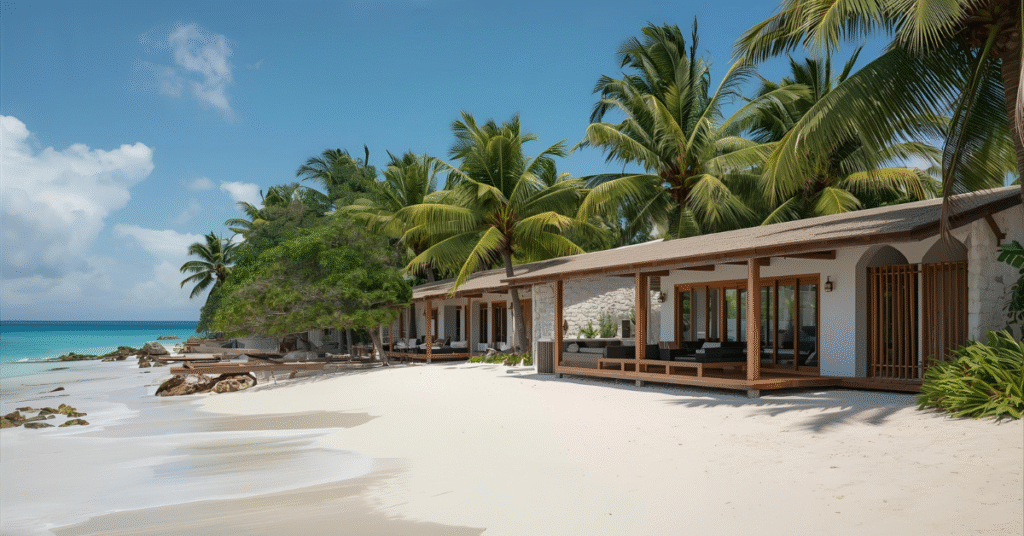
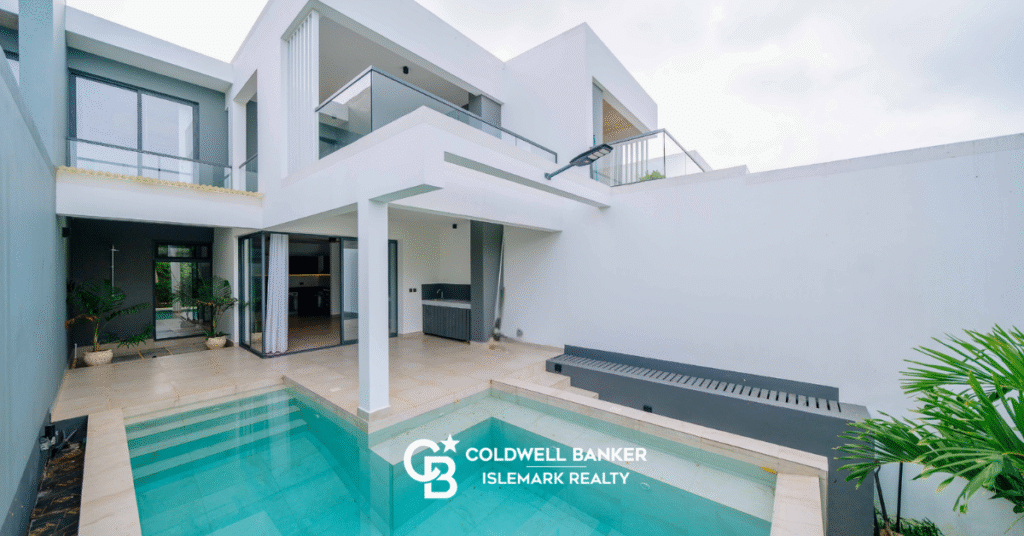
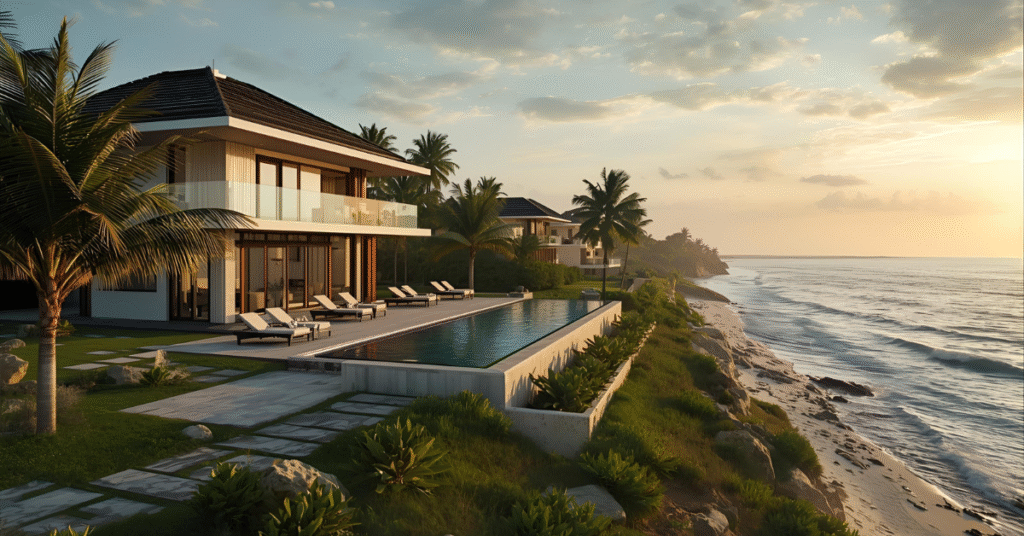
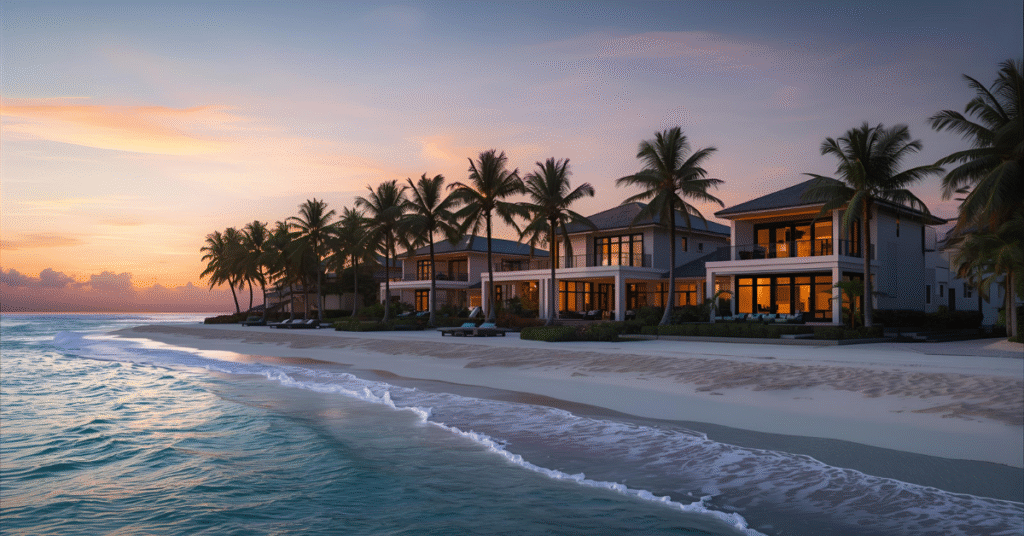
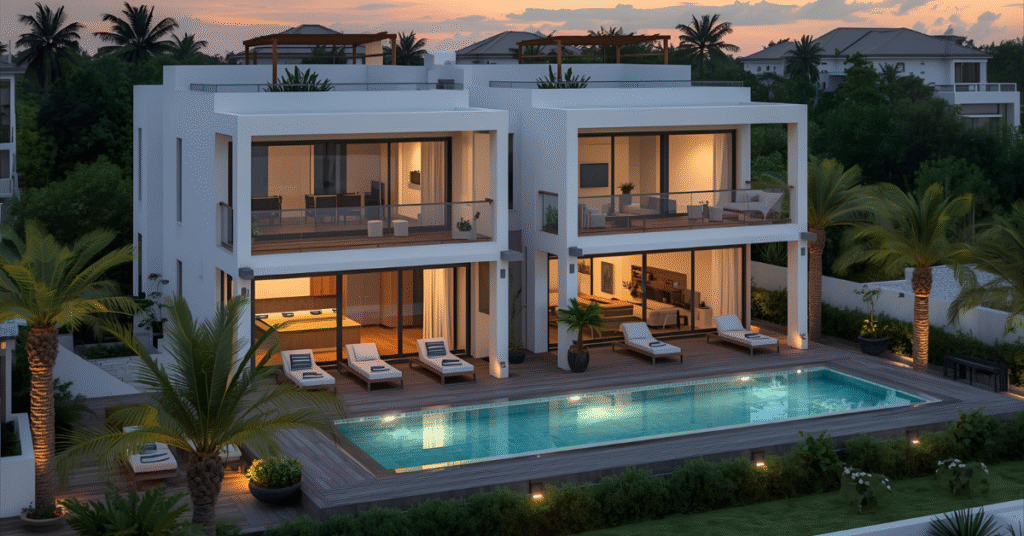
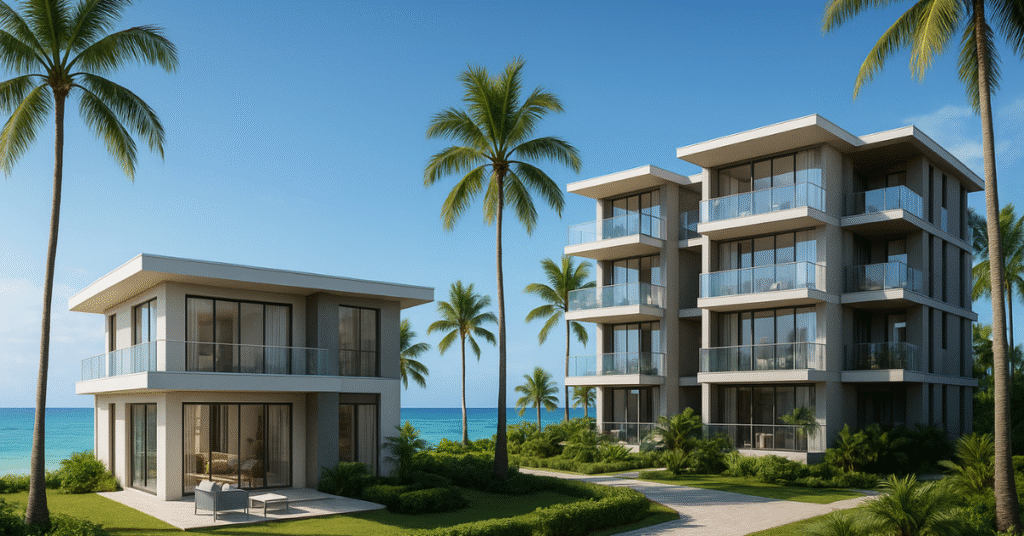
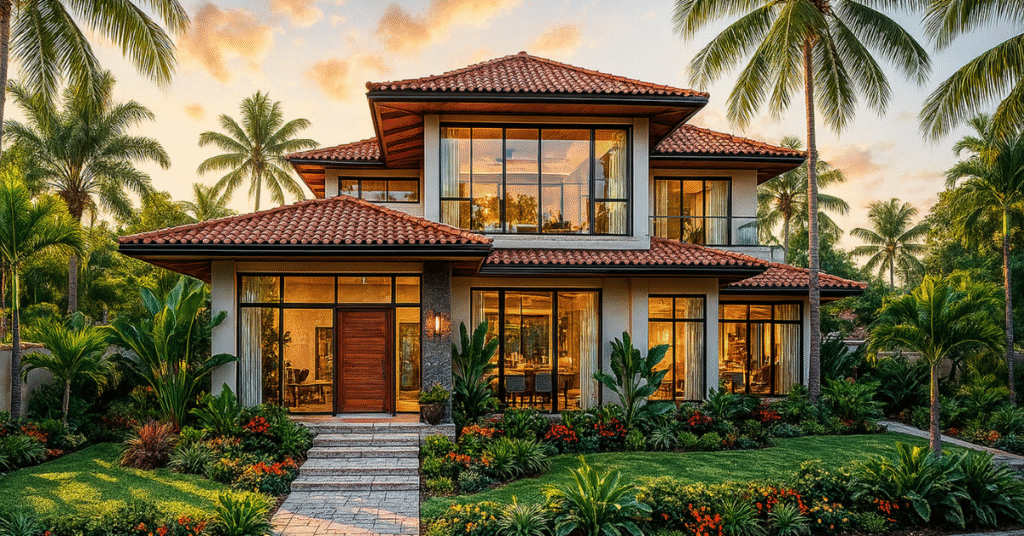
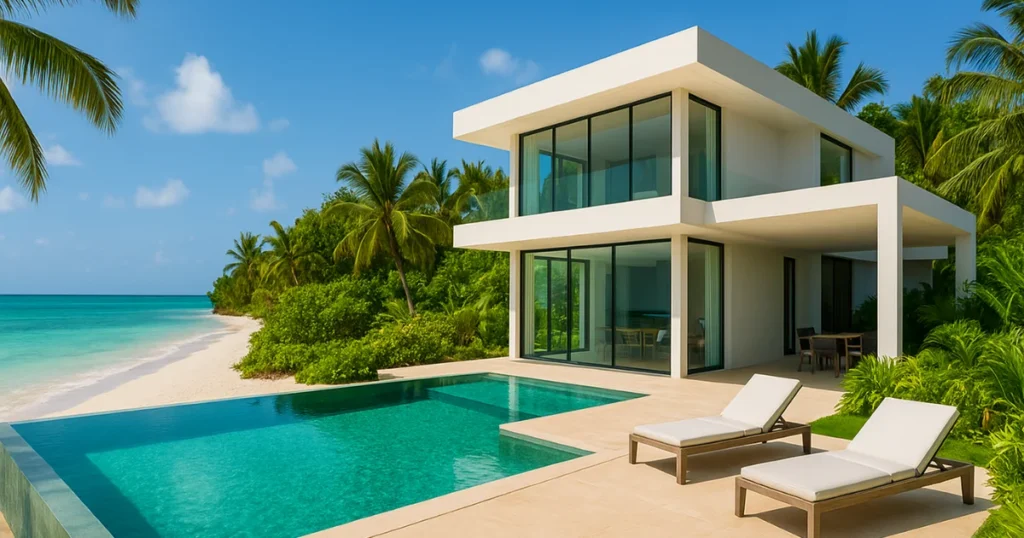
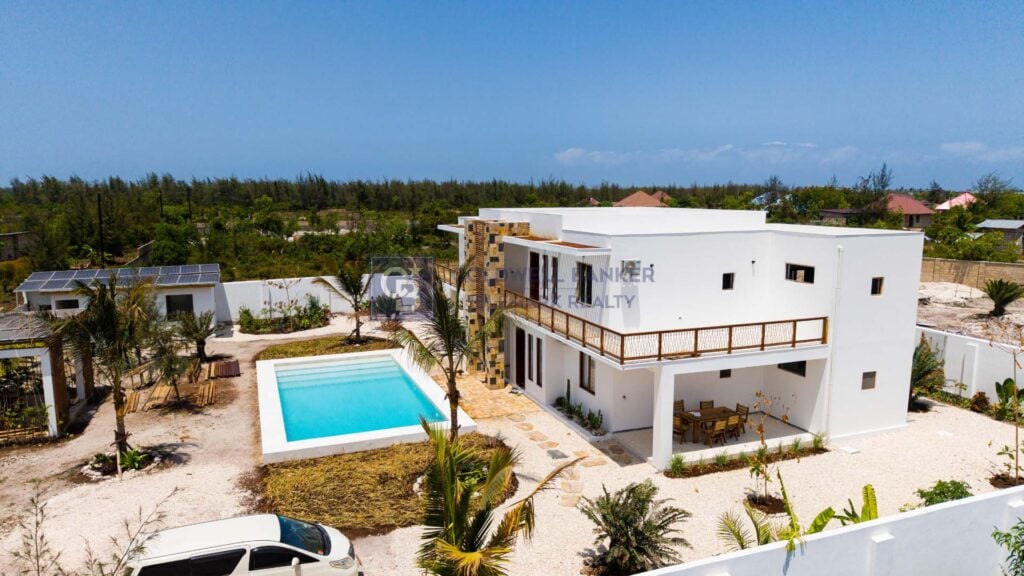
- Luxury villas — the most common beachfront product, typically 3–6 bedrooms with a private pool
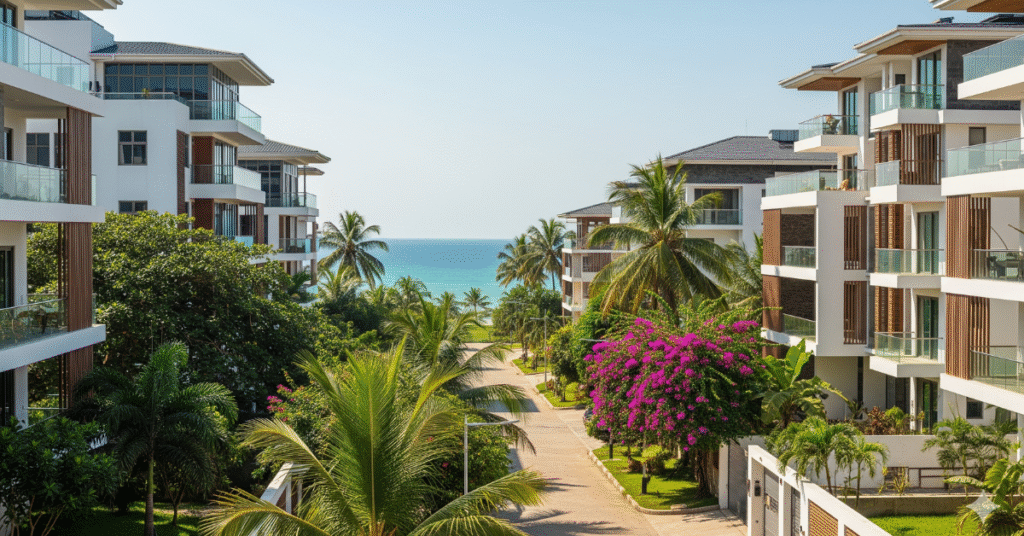
- Apartments and condominium units — the simplest legal route for foreigners (see below), usually within resort-style developments
- Boutique hotels and guesthouses — for buyers pursuing hospitality income rather than personal rental
- Resort residences — branded units within larger resort developments, often with rental-management programs built in
- Land plots — carry higher long-term upside but also the highest legal and regulatory risk (see Risks)
- Commercial / mixed-use — beachfront restaurants, dive centers, or retail, generally structured as investment-project purchases
Can Foreigners Buy Beachfront Property in Zanzibar?
Yes — but it’s important to understand exactly what “yes” means here, because this is where most confusion (and most bad deals) originate.
Zanzibar has no freehold ownership for anyone, local or foreign. All land is legally public property. What foreigners acquire instead is a long-term leasehold interest, typically structured as a 99-year lease in renewable blocks (commonly 33 years x 3). In practice, this leasehold can be sold, mortgaged, inherited, and passed to your children — for most buyers, it functions like ownership.
Key points to understand before you sign anything:
- ZIPA approval is mandatory. Nearly every foreign property purchase must go through the Zanzibar Investment Promotion Authority for a “Certificate of No Objection” before the Land Commission will register your lease. If a developer or agent tells you this step can be skipped, treat that as a serious warning sign.
- The simplest route is buying within an approved condominium project. Standalone villas outside an approved project are legally more complicated for non-Tanzanians and often require structuring the purchase as a registered investment (commonly with a minimum threshold in the region of $100,000–$300,000, depending on the project).
- Registration is what actually protects you — not the sale agreement. Under the Registered Land Act, unregistered transfers have no legal effect. A signed contract and a deposit are not the same as a registered, enforceable interest.
- Marriage to a Zanzibari citizen does not grant ownership rights. This is a common misconception; the legal system is based on registered interests, not marital or personal status.
- The new investor programme adds real incentives. Qualifying buyers can access a renewable residence permit (for themselves, a partner, and up to four children), reduced capital gains on a first resale, and VAT exemptions on qualifying rental or sale income — but eligibility depends on the specific project and investment size.
Beachfront Property Prices in Zanzibar
Prices vary meaningfully by location, frontage, size, and build quality, so treat the following as realistic ranges rather than fixed figures:
- Entry-level (non-beachfront, 2–3 bed): roughly $80,000–$150,000
- Mid-range beachfront apartments/villas (Paje, Jambiani): roughly $260,000–$700,000
- Premium beachfront villas (Nungwi, Kendwa): roughly $490,000–$2.25 million
- Ultra-luxury estates with private beach frontage: $2 million and up
Per-square-meter pricing on true beachfront land ranges from about $45–60/m² in Jambiani up to $100–120/m² in Nungwi/Kendwa, with completed beachfront villas trading between roughly $2,000–3,000+/m² depending on finish quality and exact location. Closing costs for foreign buyers typically add 3–5% on top of the purchase price (stamp duty around 1%, plus registration and legal fees), with a further 5–10% commonly budgeted for furnishing if the property will be rented.
Buying Process, Step-by-Step
- Initial consultation — clarify budget, purpose (lifestyle vs. rental income vs. hospitality), and area preferences
- Property viewing and shortlisting
- Independent due diligence — verify title status directly with the Ministry of Land and Land Registry, not just through the seller’s documents
- ZIPA application — obtain the Certificate of No Objection required for foreign registration
- Legal review — a lawyer licensed in Zanzibar (not just mainland Tanzania — the legal systems are separate) reviews the sale agreement, typically prepared in both English and Swahili
- Offer and signed sale agreement
- Payment of stamp duty and registration fees
- Registration of the leasehold with the Zanzibar Land Registry — this is the step that actually makes your interest legally enforceable
- Handover — keys, documents, and utility transfers
Realistic timeline: 60–90 days for a straightforward resale in an already-approved project; 2–3 months or longer for new construction or land purchases requiring fresh ZIPA processing.
What to Check Before Buying Beachfront Property
- Title verification directly with the Ministry of Land — never rely solely on documents shown to you by the seller or agent
- ZIPA certificate number — confirm it independently rather than taking it on trust
- Coastal setback and environmental buffer compliance (typically 30–100 meters from the shoreline)
- Confirmation the seller is the actual registered rights-holder, not a nominee or intermediary
- Flood and coastal erosion exposure for the specific plot
- Utility and infrastructure access (grid power reliability, water, road access — beachfront plots are sometimes further from stable infrastructure than they appear)
- Rental management arrangements, if income is part of your plan — ask for real occupancy and payout data from existing owners, not projected figures
- Development approvals already in place if you intend to build or renovate
- Any rental restrictions tied to a condominium or resort development’s rules
Potential Risks (and How to Avoid Them)
Zanzibar’s market has grown quickly, and with that growth has come a real, well-documented pattern of problems. None of these are reasons to avoid the market — but every one of them is avoidable with the right process.
Unverified or fraudulent titles. The single most common issue: documents that can’t be confirmed against the actual Land Registry, or a seller who isn’t the true rights-holder. Avoid this by running an independent search through the Ministry of Land before any deposit becomes non-refundable.
“Deposit first, papers later” pressure. Legitimate developers do not need you to pay before you can verify registration status. Reluctance to share a verifiable ZIPA certificate number is a red flag worth walking away from.
The coastal permission trap. A property can be genuine and beautifully located, and still be legally unbuildable or unrenovatable due to setback rules or heritage protections — this catches out buyers who assume beachfront automatically means “build what you want.”
Nominee arrangements. Putting title in a local contact’s name “on your behalf” is not a secure structure and has led to real losses for foreign buyers, particularly on mainland Tanzania deals that get conflated with Zanzibar’s separate legal system.
Treating mainland Tanzania and Zanzibar law as interchangeable. They are not. Always work with a lawyer specifically licensed and experienced in Zanzibar, not just Tanzania generally.
Over-relying on advertised gross yields. As noted above, the headline 15–18% numbers are achievable but represent a best case. Ask existing owners what they actually net after management, maintenance, and off-season vacancy.
What Buyers and Long-Term Residents Actually Say
Beyond the polished marketing from developers, a consistent set of themes shows up whenever real buyers and expats compare notes in property forums and travel communities:
- People who did well tended to buy inside an already-ZIPA-approved condominium project rather than attempting a standalone land purchase — the legal path is dramatically simpler and the risk of a stalled or invalid deal is much lower.
- The most frequently repeated piece of advice is almost boringly simple: get an independent Zanzibar-licensed lawyer and pay for your own Land Registry search, rather than relying on the documents an agent or seller hands you.
- Long-term residents are candid that rental income is seasonal and management-dependent — owners who used an established management company with a track record reported far more consistent occupancy than those who tried to self-manage a rental from abroad.
- Multiple accounts warn that enthusiasm and urgency from a seller or broker asking for a fast deposit is one of the clearest signals to slow down, not speed up.
- Buyers who visited an area across both peak and low season before committing said it gave them a far more realistic sense of the property’s rental prospects and day-to-day livability than a single showcase trip.
The throughline across almost all of this feedback is the same: Zanzibar’s opportunity is real, but the buyers who are happy with their purchase are consistently the ones who slowed down on legal verification, rather than the ones who moved fastest.
Frequently Asked Questions
Can foreigners own beachfront property in Zanzibar? Foreigners cannot hold freehold title — no one can, as all land is publicly owned — but they can hold a secure, transferable, inheritable 99-year leasehold interest, most straightforwardly through an approved condominium project.
Which beach is best for investment? Nungwi and Kendwa offer the strongest resale liquidity and most mature infrastructure; Paje offers the strongest rental yields for buyers focused on income; Jambiani offers the best value for genuine beachfront exposure on a lower budget.
What is the buying process? Due diligence and title verification, ZIPA approval, a legally reviewed sale agreement, payment of stamp duty and fees, and registration of the leasehold with the Land Registry — typically 60–90 days for a straightforward resale.
Are beachfront homes suitable for Airbnb-style rental? Yes, and it’s one of the market’s main draws — gross yields of 12–18% are realistic for well-managed beachfront villas in peak areas, though net returns after management and off-season vacancy are meaningfully lower.
Is financing available? Mortgage financing for foreign buyers is limited and typically requires local income or residency; most foreign purchases in Zanzibar are cash transactions.
Are there annual taxes or fees? Annual property tax is low (roughly 0.1% of assessed value), and qualifying investor-programme purchases can carry additional VAT and capital gains benefits — but these vary by project, so confirm specifics for your purchase.
What legal documents should I review? The ZIPA Certificate of No Objection, the seller’s original title/lease documents verified against the Land Registry, the sale agreement (in English and Swahili), and confirmation of any coastal setback or heritage restrictions on the specific plot.
Why Work with Coldwell Banker Tanzania & Zanzibar
Beachfront real estate in Zanzibar rewards buyers who move carefully, not quickly. Coldwell Banker has spent 119 years building the kind of process discipline this market requires:
- A global brand with a presence in 45+ countries and territories, paired with a dedicated local office in Urban West, Zanzibar
- Local advisors who understand the practical difference between what an agent claims and what the Land Registry will actually confirm
- Direct experience navigating ZIPA approval, condominium project structures, and Zanzibar’s distinct legal system
- Access to vetted, ZIPA-registered listings across Nungwi, Kendwa, Paje, Jambiani, Matemwe, and Michamvi
- A transparent buying process built around independent verification at every stage, not just a signed agreement
Conclusion
Beachfront property remains one of Zanzibar’s most desirable — and most scrutinized — real estate segments. The opportunity is genuine: record tourism, constrained shoreline supply, and a leasehold system that gives foreign buyers real, enforceable rights when it’s properly navigated. But success here depends far less on finding a beautiful villa than on choosing the right location, understanding exactly what you’re legally acquiring, and working with people who verify rather than simply promise.
Contact Coldwell Banker Tanzania & Zanzibar for tailored advice and access to our curated portfolio of beachfront listings across the island.