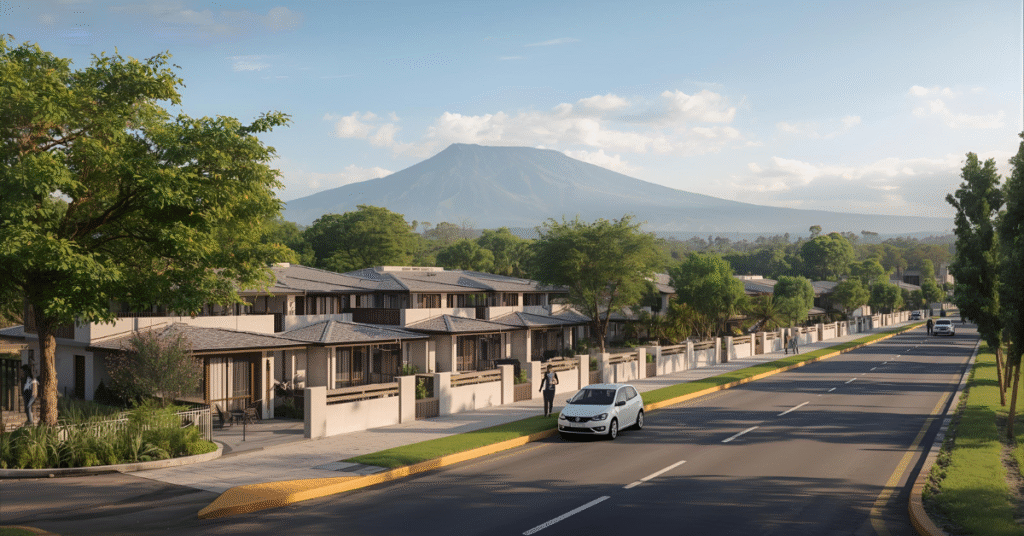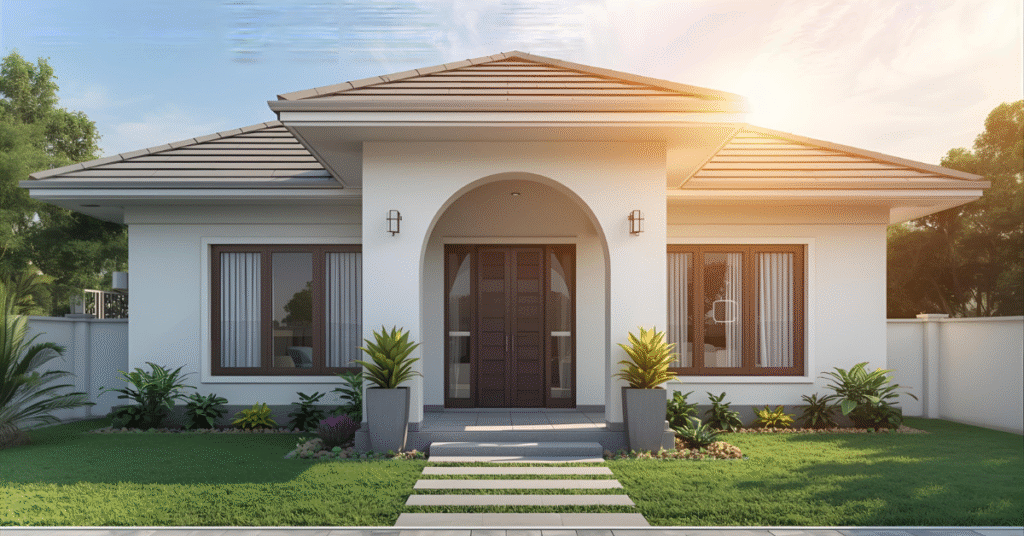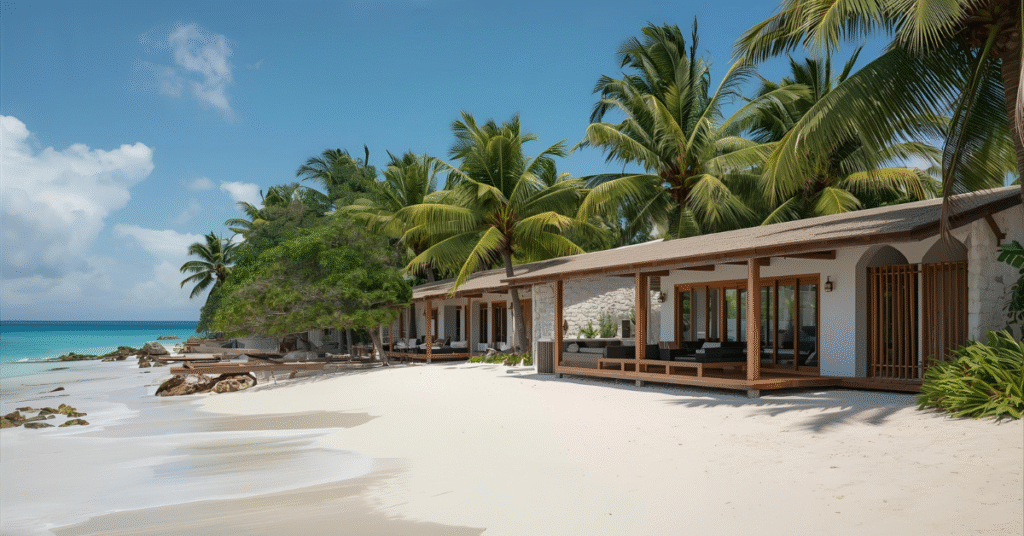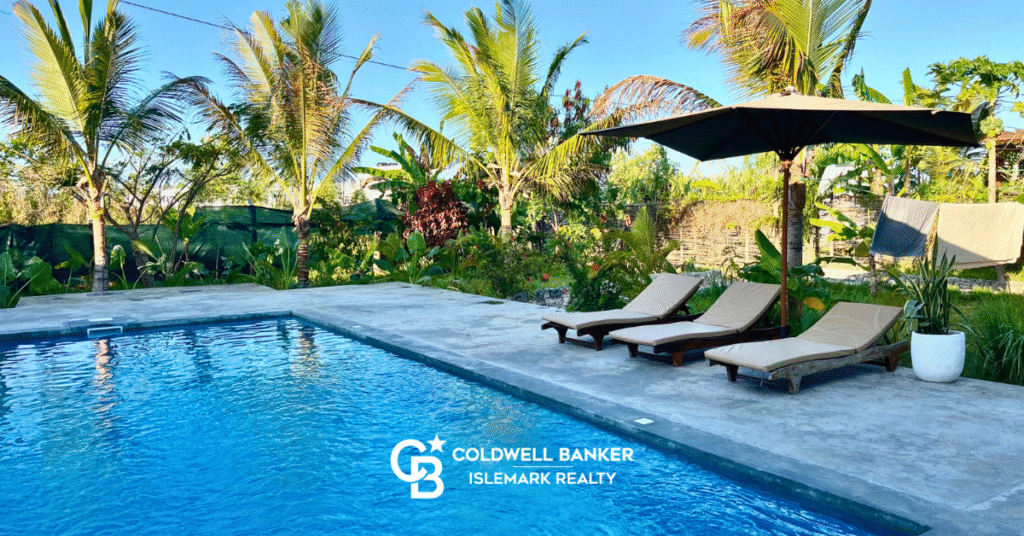
Quick Answer Box
- Is Zanzibar affordable overall? It depends entirely on how you live. Local-style living is genuinely inexpensive, but expat-grade housing in coastal areas quickly pushes monthly costs to $1,500–$3,000 or more.
- What is the biggest expense? Housing — by a significant margin. Rent is the single line item that separates a comfortable life from a stretched one.
- Who finds it affordable? Property owners, long-term renters who secured early leases, remote workers on Western salaries, and those comfortable eating and shopping locally.
- Who may find it expensive? Short-stay visitors assuming tourist accommodation is representative of long-term costs; expat families requiring international schooling; and anyone expecting Southeast Asian price levels.
- What this guide covers: Real monthly budget ranges by lifestyle, area-by-area cost breakdowns, full sample budgets, and a frank look at when renting versus buying changes the financial picture entirely.
How Expensive Is Zanzibar Really?
The honest answer is: it depends on which version of Zanzibar you are comparing against.
For a local Zanzibari family, the island is a manageable place to live on a modest income. For a tourist staying in a beachfront resort for a week, it can feel surprisingly reasonable. For a foreign resident trying to replicate a Western standard of living with a furnished coastal apartment, reliable internet, a vehicle, and occasional imported groceries — the costs accumulate faster than most people expect.
Zanzibar sits in the top 17% of the least expensive cities globally when measured by aggregate cost of living data. That headline figure is accurate, but it reflects an average that blends local market prices with expat spending patterns. The lived reality for most foreign residents lands somewhere between those two poles.
The fundamental dynamic is this: Zanzibar is structurally built for short-stay tourism. The accommodation supply skews heavily toward fully furnished, premium-priced units aimed at visitors on week-long holidays. Long-term rental stock, particularly in desirable coastal areas, is limited and competes directly with short-stay demand. That mismatch — scarce supply meeting growing international interest — is what makes housing the defining cost for anyone planning a serious stay.
Infrastructure adds another layer of complexity. Power outages remain a feature of island life despite ongoing investment in grid stability. Many landlords in premium areas market backup generator access as an amenity, and rightfully so — it is one. Internet quality has improved substantially, particularly in Stone Town, but remains uneven in more remote coastal villages. Almost everything beyond fresh local produce is imported, which puts a persistent premium on the consumer goods most expats consider ordinary.
None of this makes Zanzibar unaffordable. It makes it a place that rewards preparation, local knowledge, and realistic expectations — qualities that Coldwell Banker’s team, present on the ground across the island, brings directly to clients.
Monthly Cost of Living in Zanzibar by Lifestyle
Budget Local-Style Living
A foreign resident fully committed to living the way Zanzibaris live — eating from local markets and street stalls, renting in inland or non-tourist neighborhoods like Mwanakwerekwe, Chukwani, or Ng’ambo, and relying on dalla-dallas and bajaj tuk-tuks for transport — can get by on $700–$1,000 per month.
At this level, rent for a basic one-bedroom might cost $250–$400, groceries from local markets run $100–$150, and daily meals can cost as little as $1.50–$3.00 at local restaurants. Transport is negligible. The tradeoff is that housing will be unfurnished, power reliability less predictable, and the lifestyle gap from most Western baselines considerable.
This budget works for someone who has genuinely acclimatised to Zanzibar and built local relationships. It is not a realistic starting point for a new arrival, and it is not the lifestyle most property investors or expat residents are seeking.
Comfortable Expat / Remote-Worker Lifestyle
A remote worker or professional expat renting a furnished one-bedroom apartment in a mid-tier area — Fumba, Mbweni, or inland Stone Town — with reliable internet, a mix of local and restaurant dining, and occasional leisure spending will typically budget $1,300–$1,800 per month.
This covers a decent furnished apartment at $500–$700, utilities including backup power at $100–$150, internet and mobile at $50–$80, groceries at $200–$300, dining out two to three times per week at $150–$200, and a scooter or periodic taxi use at $80–$150.
This is the lifestyle range most cited by established remote workers and long-stay residents. It represents a comfortable existence by any measure, and a fraction of what comparable quality of life costs in London, Amsterdam, or Sydney.
Couple Living Near the Beach
A couple renting a furnished one- to two-bedroom apartment in Paje, Nungwi, or similar coastal areas, with beach access as a priority, should realistically budget $2,000–$3,000 per month.
Rent in these locations typically starts at $800 for a basic furnished apartment and rises sharply for anything with direct beach proximity, a pool, or reliable backup power included. Combined with groceries, dining, transport, utilities, and a modest leisure budget, this range represents a genuine coastal lifestyle — not a shoestring one, and not a luxury one.
Couples who own their property and have eliminated the rent variable often live comfortably at the lower end of this range or below.
Family with Higher Housing and Schooling Expectations
A family seeking a two- to three-bedroom property in a secure, well-serviced area, with expectations of international schooling, health insurance, and regular access to imported goods, should plan for $3,500–$6,000 per month depending on choices made across each category.
International school fees are not trivial on an island with limited options. Healthcare provision is restricted — Zanzibar has basic medical facilities, but serious cases require evacuation to Dar es Salaam or further. Families in this category almost invariably carry comprehensive health insurance, adding meaningfully to the monthly budget. The housing itself — a three-bedroom villa in Fumba Town or a well-serviced home near Stone Town — will typically range from $1,200 to $2,500 monthly depending on specification and proximity to the coast.
At this level, ownership starts to make clear financial sense over sustained renting. The transition from recurring rental expenditure to fixed mortgage or equity-building is a conversation Coldwell Banker’s advisors have regularly with families planning multi-year stays.
The Biggest Cost in Zanzibar Is Housing
This section deserves the most attention, because it is where most planning errors occur and where the widest range of outcomes is possible.
Rent in Stone Town vs Beach Areas
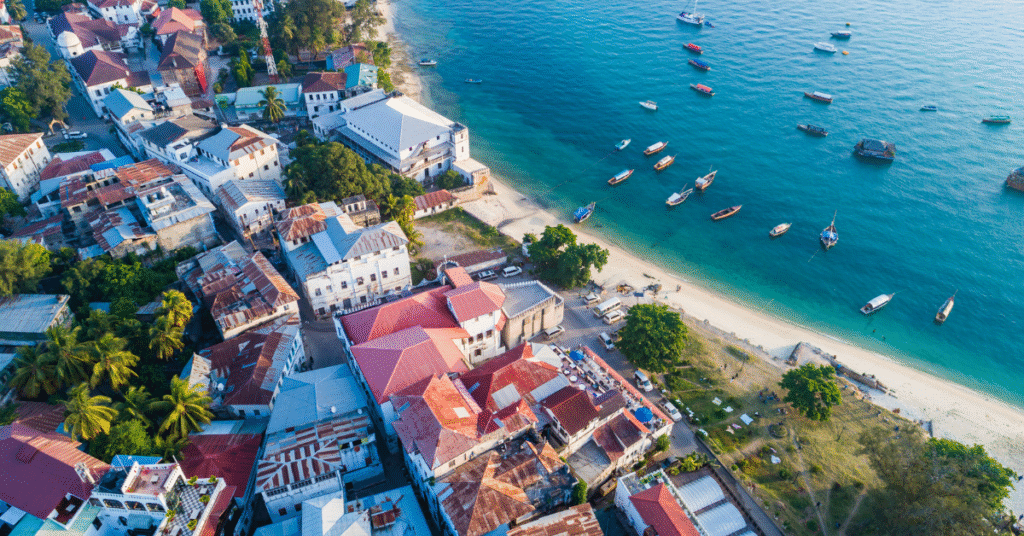
Stone Town, Zanzibar’s UNESCO-listed historic capital, remains the most accessible entry point for renters on a budget. One-bedroom apartments start at approximately $300–$600 per month, with well-located furnished units typically in the $400–$700 range. Two-bedroom properties average around $600–$900.
The trade here is urban density and cultural richness against relative lack of beach proximity. Stone Town offers cafes, coworking spaces, walkable amenities, and a growing community of NGO workers, creative professionals, and established expats. For professionals without a hard requirement for beach access, it continues to offer the island’s best value-for-amenity proposition.
Coastal areas tell a different story. In Paje, Nungwi, and Kendwa — Zanzibar’s premium beach zones — furnished one-bedroom apartments begin at $700–$1,000 and quickly reach $1,500 or more for anything with direct beach access, a private pool, or strong backup power. Beachfront villas range from $2,000 to $10,000 per month, largely driven by short-stay tourism premium spillover.
As of early 2026, average rents across Zanzibar’s top coastal neighborhoods sit between TZS 2,500,000 and TZS 3,000,000 per month for a two-bedroom apartment — approximately $1,000 to $1,225.
Long-Term Rental vs Short-Stay Accommodation
The gap between short-stay and long-term pricing is one of the most important things a prospective resident can understand before arriving.
A property that lists on Airbnb for $150 per night during peak season translates to roughly $4,500 per month at full occupancy. The same property on a 12-month lease agreement — negotiated directly with a landlord or through an established agency — will often be available for $800–$1,500 per month, depending on season and negotiation.
Long-term lease negotiation takes time, local contacts, and ideally professional representation. Landlords in high-demand zones like Paje and Nungwi increasingly hold firm on pricing because short-stay income provides an attractive alternative to annual tenants. Arriving with a budget, flexibility on timing, and a trusted intermediary substantially improves outcomes.
What Drives Rent Up: Beach Access, Furnishing, Utilities, and Tourism Pressure
Four factors consistently separate affordable Zanzibar rentals from expensive ones:
Beach access is the single greatest pricing premium. Properties with a 5-minute walk to the beach versus direct sand access can differ by 30–60% in monthly cost. Understanding how much this premium is worth to you personally is a fundamental budgeting question.
Furnishing level adds meaningful cost to advertised rent. The majority of listings in expat-frequented areas are fully furnished, with landlords building the cost of imported furniture, appliances, and white goods into their pricing. A well-furnished one-bedroom in Paje reflects not just rent, but an embedded furniture loan.
Utilities and backup power are rarely included in base rent for unfurnished properties, but are commonly bundled into furnished expat units. Where they are separate, electricity costs approximately $80–$150 per month for moderate usage, with higher consumption from air conditioning and generator fuel pushing costs upward.
Seasonal tourism pressure creates genuine rental scarcity in peak months — December through February and June through August. Attempting to secure a long-term rental during these windows means competing directly with short-stay demand, often at inflated prices. Prospective residents who arrive outside peak season, or who engage a local agent ahead of arrival, consistently secure better terms.
Renting vs Buying: When Each Makes Sense
For stays of one to two years or less, renting is almost always the correct approach. The island’s property purchase process — navigating 99-year leasehold arrangements for foreign nationals, due diligence requirements, and transaction costs — takes time and professional guidance, and the short-term economics rarely justify the effort.
For residents planning to stay three years or more, or investors seeking both rental yield and capital appreciation, the calculation shifts decisively in favor of ownership. Beachfront villas in Paje and Nungwi are currently generating gross rental yields of 12–15%, with prime coastal land values appreciating at approximately 10% per year. A property that costs $2,000 per month to rent might be purchasable for $260,000 — a figure that generates a competitive return when managed as a holiday rental during the owner’s absence.
Coldwell Banker’s advisors work with both renters and buyers at every stage of this decision. The conversation about when renting transitions into ownership is one of the most consequential a prospective Zanzibar resident will have.
Typical Monthly Budget Breakdown
The table below reflects a mid-range expat lifestyle — furnished apartment in a good location, standard amenities, and moderate leisure spending. All figures are in USD.
| Category | Budget Range |
|---|---|
| Rent (1-bed furnished, non-beachfront) | $500 – $900 |
| Utilities (electricity, water) | $80 – $150 |
| Internet and mobile | $50 – $80 |
| Groceries (mix of local and imported) | $200 – $350 |
| Dining out (2–3x per week) | $150 – $250 |
| Transport (scooter fuel / taxis) | $80 – $150 |
| Domestic help (part-time cleaner) | $80 – $150 |
| Leisure, fitness, and activities | $100 – $200 |
| Health insurance and contingency | $150 – $300 |
| Total | $1,390 – $2,530 |
This range covers a comfortable, settled lifestyle for a single expat or professional. Couples should budget approximately 1.4–1.6x this range. Families with children should use the figures in the family scenario section as a starting point.
Cost of Living by Area in Zanzibar
Area selection is the most consequential decision a Zanzibar renter or buyer will make. Different zones serve genuinely different lifestyles, and the cost implications are substantial.
Stone Town
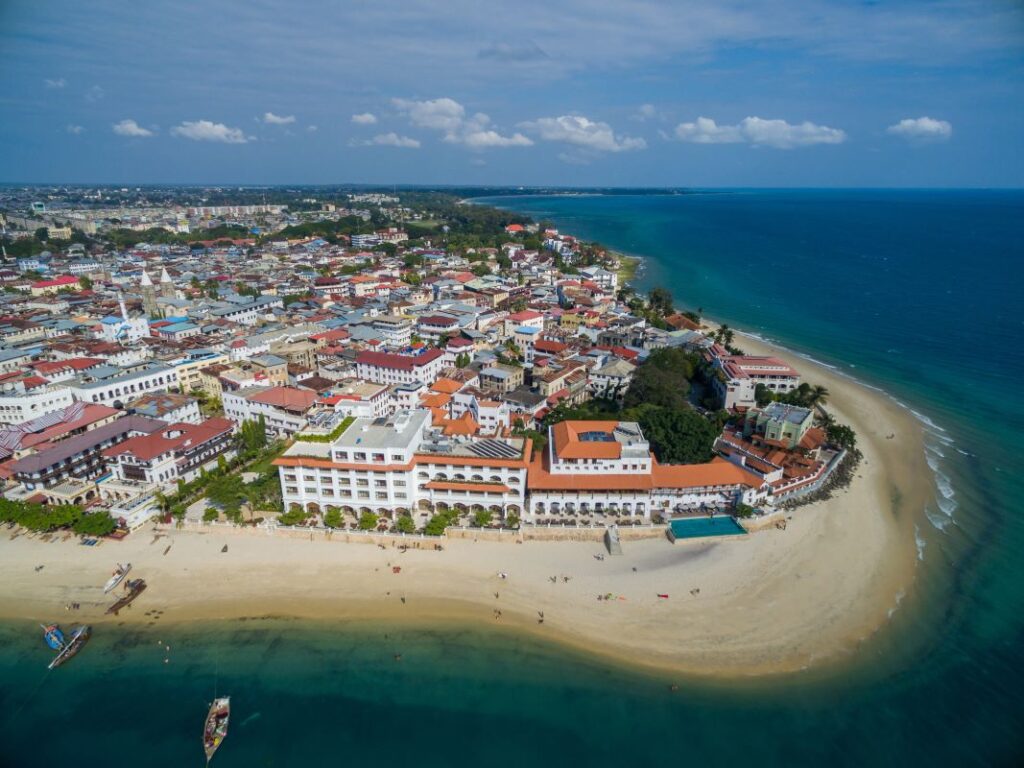
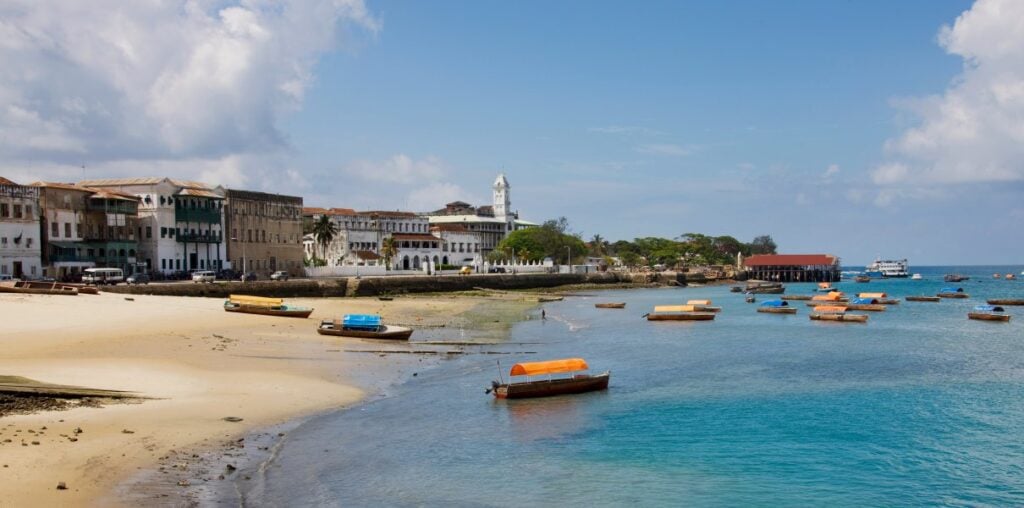
Stone Town is Zanzibar’s urban heart — a UNESCO World Heritage Site with layered Swahili, Arab, Indian, and colonial architecture, walkable markets, and a concentration of coworking spaces, cafes, and cultural institutions that no other part of the island can match.
Typical renter profile: NGO professionals, creative workers, digital nomads, culture-focused expats, and long-stay visitors who prioritize urban life over beach proximity.
Pricing tendency: Zanzibar’s most accessible rental market. One-bedroom apartments range from $300–$600, two-bedroom units from $600–$900. The UNESCO zone commands a premium for restored heritage properties, which can reach $1,000–$1,500 for boutique flats in prime lanes.
Value tradeoff: Excellent. Stone Town delivers strong walkability, community infrastructure, and the most consistent power and internet reliability on the island. Beach access requires a 20–45 minute journey by taxi or scooter to reach quality stretches. Best for residents whose professional or social needs anchor them to urban services.
Paje / Jambiani / Bwejuu
The southeast coast is Zanzibar’s most established destination for kitesurfers, remote workers, and lifestyle-seeking expats. Paje in particular has developed a genuine community infrastructure — cafes, coworking options, yoga studios, dive schools, and a peer network of international long-termers.
Typical renter profile: Active lifestyle seekers, kitesurfers, digital nomads comfortable with a village pace, couples seeking beach proximity without Stone Town’s urban intensity.
Pricing tendency: Mid-to-premium. Furnished one-bedrooms range from $700–$1,200; beach-adjacent villas from $1,500 upward. Jambiani and Bwejuu tend to offer slightly lower prices than Paje proper with comparable beach quality — a gap that informed buyers are increasingly exploiting.
Value tradeoff: High for lifestyle, moderate for infrastructure. Internet quality and power reliability in Paje have improved but remain less predictable than Stone Town. The social scene is vibrant during high season and notably quieter during shoulder months, which affects both the feel of the community and short-term rental occupancy for investors.
Nungwi / Kendwa
The northern tip of Unguja is Zanzibar’s most photogenic coastline — white sand, calm turquoise water, and some of the island’s most recognizable luxury resort brands. Nungwi is the most developed tourist zone outside Stone Town.
Typical renter profile: High-end tourists transitioning to longer stays, investors in the premium short-stay market, families seeking resort-adjacent amenities.
Pricing tendency: Premium to luxury. Furnished apartments start at $900–$1,300; beachfront villas range from $2,000 to $5,000+ monthly. Short-term rental competition here is the most intense on the island, which keeps long-term supply constrained and prices high.
Value tradeoff: Outstanding location and amenity access, but at a meaningful cost premium. Experienced investors and local professionals frequently note that Nungwi’s central tourism strip — despite its obvious appeal — can carry hidden operational costs: noise, high management competition, power inconsistency, and price sensitivity during slower seasons. Properties slightly set back from the main strip often offer better long-term value.
Matemwe and Quieter Coastal Areas
Matemwe, on the northeast coast, and similar lower-profile zones represent Zanzibar’s emerging value opportunity. Snorkeling access to the Mnemba Atoll, cleaner beaches in many stretches, and meaningfully lower density than Paje or Nungwi make these areas attractive to a quieter demographic.
Typical renter profile: Retirees, privacy-seeking couples, investors looking ahead of the main demand curve.
Pricing tendency: Accessible to mid-range. Furnished properties can be secured for $400–$900 depending on specification. The infrastructure gap versus the main tourist centers is real — fewer dining options, fewer services — but this is exactly what draws residents who want distance from the tourism economy.
Value tradeoff: Best price-per-square-meter on the coastline with genuine beach quality. The tradeoff is early-adopter patience — amenities and services will continue to develop, but the timeline is not predictable.
Is Zanzibar Cheap for Tourists but Expensive for Residents?
Yes — and understanding this split matters enormously for anyone planning a long stay.
The tourist pricing layer on Zanzibar operates as a distinct economy. A resort meal, a tour, a beachfront room booked through a global platform — all of these are priced for visitors arriving from high-income countries and staying for a week. They reflect a short-stay premium, platform commission structures, and the embedded costs of servicing transient guests.
The resident pricing layer is different. Once a foreign resident has secured a direct long-term lease, shops at Darajani Market rather than hotel shops, uses local restaurants rather than tourist-facing ones, and has established a scooter or driver relationship, the cost profile changes substantially.
The gap is real and consistent: a meal at a tourist restaurant in Stone Town or Paje might cost $12–$20. A comparable meal at a local eatery in the same area costs $2–$5. Fresh produce at local markets runs 50–70% cheaper than in expat-facing supermarkets. Bodaboda and taxi fares are negotiable and, for established residents who speak even basic Kiswahili, consistently lower than tourist rates.
The lesson for anyone planning a long stay is not to budget based on a scouting trip or early tourist experience. The costs a resident encounters, once settled, are noticeably different from the costs a visitor encounters during the first two weeks.
Read more: Everything You Need to Know about Zanzibar Island
What Daily Life Costs Look Like
Groceries and Local Markets
Zanzibar’s local markets — particularly Darajani Market in Stone Town — offer some of the most affordable fresh produce in East Africa. Seafood, fruits, vegetables, and staples like rice, ugali, and coconut milk are genuinely inexpensive. A week of local market shopping for one person can cost as little as $20–$40.
The cost differential kicks in with imported goods. Western breakfast cereals, European cheeses, certain wine labels, packaged foods, and international brand toiletries all carry significant import premiums. A mixed grocery shop that combines local produce with selective imported items typically costs $200–$350 per month for a couple.
Cafés, Restaurants, and Imported Food
Zanzibar’s food scene has diversified considerably in recent years. Stone Town has a growing number of quality cafes charging $2–$4 for a cappuccino and $5–$10 for a meal. Paje has developed an international café culture, with popular spots offering reliable Wi-Fi and workable food at similarly accessible prices.
Resort and tourist-facing restaurants are the notable price outlier. A three-course dinner for two at a mid-range restaurant costs $40–$70, and imported wine or spirits add meaningfully to that figure.
The practical approach for budget-conscious residents is to cook at home using local ingredients for the majority of meals and treat restaurant dining as an occasional leisure expenditure rather than a daily default.
Transport Options
Zanzibar offers several transport options at meaningfully different price points. Dalla-dallas — shared minibuses — are the cheapest option at a few hundred shillings per journey but are crowded and follow fixed routes. Bajaj tuk-tuks are affordable for short urban trips at $1–$3 per ride. Bodaboda scooter taxis cover most of the island at $2–$6 per trip depending on distance.
Most established residents rent or purchase a scooter, which is the most practical option for coastal living. Monthly fuel costs for a scooter average $30–$60 with regular use. Car rental or ownership is considerably more expensive and less common, though some families with children opt for a vehicle for safety and practicality reasons.
Internet Reliability and Remote-Work Costs
Stone Town has reached a level of internet reliability that supports regular remote work, with multiple coworking spaces and cafes offering stable fibre connections. Coastal villages are less consistent, though Paje specifically has improved substantially.
A dedicated fibre connection for a residential property costs approximately $50–$100 per month depending on the provider and plan. Mobile data remains remarkably affordable: a 10GB SIM bundle costs approximately $4–$5, and a 30GB bundle approximately $12–$13. Many remote workers combine a fixed connection with a local SIM as backup — a wise practice given occasional infrastructure variability.
What Coldwell Banker Sees in the Zanzibar Housing Market
As an active presence across Zanzibar’s key residential and investment zones, Coldwell Banker’s team observes several patterns that consistently shape outcomes for clients.
What renters misunderstand most is the relationship between tourist pricing and long-term rental pricing. Many prospective residents arrive with a budget formed by a previous holiday stay and underestimate how substantially a negotiated, direct, long-term lease differs from a short-stay booking. The gap is often 40–60% in the same property type and zone. Engaging professional representation before arrival rather than after is consistently the better approach.
Where foreign residents overspend is on furnished properties in peak tourist zones where the landlord’s effective alternative is short-stay platform income. Nungwi’s central strip and parts of Paje’s beachfront tend to command rents that, upon reflection, do not justify the infrastructure and service trade-offs residents encounter. Areas slightly removed from the main tourism concentration — Jambiani, Matemwe, or Fumba — routinely deliver better value for the same quality of life.
Which locations offer better value is a question Coldwell Banker answers with current market data rather than reputation. As of 2026, Fumba Town and the Dimani area represent strong value propositions for family renters and buyers: modern infrastructure, growing community, reliable power and internet, and rental yields of 7–11% for investors. Jambiani is similarly underpriced relative to Paje for almost identical beach quality.
When buyers choose ownership over repeated seasonal renting is typically after two to three years of sustained island presence. The combination of annual 5–10% appreciation in prime areas, rental yields that outperform comparable Indian Ocean destinations, and the straightforward reality that monthly mortgage or ownership costs are lower than equivalent long-term rental costs creates a compelling case. Coldwell Banker works with clients across this transition — from first rental inquiry to property purchase and, where relevant, into portfolio management.
Read more: Legal Process of Buying Property in Zanzibar
Sample Budgets
Solo Remote Worker
Location: Stone Town furnished one-bedroom Income requirement: Western remote salary
| Expense | Monthly Cost (USD) |
|---|---|
| Rent | $550 |
| Utilities | $100 |
| Internet + mobile | $70 |
| Groceries | $200 |
| Dining out (3x per week) | $180 |
| Transport (scooter fuel + taxis) | $100 |
| Leisure and activities | $150 |
| Health insurance | $150 |
| Contingency | $100 |
| Total | ~$1,600 |
Couple Renting Near the Beach
Location: Paje, furnished 1-bed apartment with garden Income requirement: Two remote incomes or one strong professional salary
| Expense | Monthly Cost (USD) |
|---|---|
| Rent | $950 |
| Utilities (including generator) | $150 |
| Internet + mobile (two devices) | $100 |
| Groceries | $350 |
| Dining out (4x per week combined) | $280 |
| Transport (scooter x2) | $150 |
| Leisure, diving, kitesurfing | $200 |
| Health insurance (both) | $250 |
| Contingency | $150 |
| Total | ~$2,580 |
Family Seeking Comfort and Stability
Location: Fumba Town, 3-bed furnished villa Income requirement: $5,000+ combined or passive income
| Expense | Monthly Cost (USD) |
|---|---|
| Rent | $1,800 |
| Utilities (reliable backup power included) | $200 |
| Internet + mobile | $120 |
| Groceries (mix of local and imported) | $600 |
| Dining out and entertainment | $400 |
| Vehicle (car rental or fuel) | $300 |
| Domestic help (full-time) | $200 |
| International school fees (one child) | $800 |
| Family health insurance | $400 |
| Contingency | $300 |
| Total | ~$5,120 |
Hidden Costs People Forget When Budgeting for Zanzibar
Generator and backup power realities. Zanzibar’s grid has improved with the ongoing ZESTA programme and a major $8.4 million stabilisation project launched in 2025. However, outages remain a reality, particularly in coastal villages. Properties marketed with generator access or solar backup carry this cost somewhere — either embedded in rent or as a separate monthly fuel cost of $30–$80. Properties without reliable backup create productivity and comfort risks that compound over time.
Imported goods premiums. Almost everything beyond local fresh produce is imported, and pricing reflects it. A bottle of imported wine costs $15–$30. Western cereal, quality olive oil, and international toiletry brands routinely cost two to three times their European equivalents. Residents who do not adapt their consumption patterns to local alternatives consistently report that groceries are their biggest budget surprise.
Scooter or driver costs. The island’s layout makes personal transport essentially non-negotiable for residents outside Stone Town’s walking radius. A reliable scooter rental or purchase costs $100–$200 per month all-in. A dedicated driver arrangement runs $300–$600 per month and is the choice of most families and senior professionals.
Healthcare and insurance. Zanzibar’s medical infrastructure covers basic care competently, but serious illness or injury requires mainland evacuation. Comprehensive international health insurance is not optional for long-term residents — it is a baseline requirement. Quality family coverage costs $300–$600 per month and should be budgeted from day one, not treated as an afterthought.
Furnishing and setup costs. Properties rented unfurnished or requiring additional items involve significant one-time costs, given the import premium on furniture and appliances. A full setup for a two-bedroom apartment can cost $2,000–$5,000. Many experienced residents factor a first-month setup budget of $1,500–$3,000 above normal monthly expenditure.
Seasonal accommodation spikes. Anyone arriving during peak season (December–February, June–August) without a pre-arranged long-term lease will encounter a constrained and elevated short-stay market. Planning arrival for shoulder months and engaging a local agency ahead of time is consistently the correct approach.
Renting vs Buying in Zanzibar: What Changes Your Monthly Cost
The monthly cost difference between renting and buying in Zanzibar is not theoretical — it is one of the most practically meaningful financial decisions a long-term resident makes.
A furnished two-bedroom apartment in Paje might rent for $1,200 per month on a direct long-term lease. A comparable property purchased for $260,000 under a 99-year leasehold arrangement — a legal structure available to foreign nationals — represents a fundamentally different monthly financial profile. With no mortgage (most international buyers purchase with cash, as local mortgage rates hover near 17%), the same property produces zero monthly housing cost to the owner while simultaneously generating 12–15% gross rental yield when let during periods of absence.
Even for buyers who finance a portion of the purchase, the monthly cost of ownership typically undercuts the equivalent rental cost within three to five years, while building an appreciating asset.
The key legal point: foreign nationals cannot hold freehold title in Tanzania, but 99-year leasehold structures are well-established, legally sound, and actively used by hundreds of international buyers across Zanzibar. Coldwell Banker’s advisors guide clients through this process with full legal support, ensuring both the property selection and the ownership structure are appropriate for each individual’s circumstances.
The decision point, in practical terms, is this: if you are spending $1,200–$2,000 per month on rent in Zanzibar and planning to do so for three years or more, a purchase conversation is worth having.
FAQ
Is Zanzibar expensive to live in? Relative to most Western countries, no. Relative to Southeast Asian digital nomad destinations like Bali or Chiang Mai, it is broadly comparable, with housing as the variable that most determines the overall cost. A realistic monthly budget for a comfortable expat lifestyle ranges from $1,300 to $2,500 for a single person, depending primarily on housing choices.
How much rent should I expect in Zanzibar? Rental prices span a wide range. Inland and non-tourist neighborhoods offer apartments from $250–$500 per month. Stone Town furnished apartments typically cost $400–$700. Beach-area rentals in Paje or Nungwi start at $700–$1,000 for a one-bedroom and rise steeply for beach-adjacent or villa-format properties.
Can you live well on $1,000 a month in Zanzibar? A single person can live decently on $1,000 per month in Zanzibar, but the choices are constrained. This budget accommodates modest housing in a non-premium area, mostly local market food, minimal dining out, and limited leisure spending. It is workable but leaves very little buffer for healthcare, travel, or unexpected costs. Most expat professionals find $1,500–$2,000 a more sustainable threshold for genuine comfort.
Which area is best for expats? There is no single answer — it depends on lifestyle priorities. Stone Town is best for urban professionals and those valuing walkability and cultural engagement. Paje suits remote workers and active lifestyle seekers. Fumba Town is increasingly popular with families for its modern infrastructure and community feel. Matemwe and Jambiani appeal to those prioritizing quiet coastal living and value.
Is Stone Town cheaper than beach towns? Yes, consistently. Stone Town offers Zanzibar’s most accessible long-term rental market for furnished expat-grade properties. Beach towns — particularly Nungwi and Paje — command premiums of 30–100% over Stone Town for comparable property specifications, driven by tourism demand and beach proximity.
Is it cheaper to rent long term or buy property? For stays under two years, renting is almost always more cost-effective when transaction costs are considered. For stays of three years or more, ownership typically becomes the more economical choice — and often the more financially productive one, given Zanzibar’s rental yields and appreciation trajectory. A purchase also eliminates exposure to annual rent increases, which are projected at 5–9% across the island in 2026.
Coldwell Banker Tanzania operates across Zanzibar’s key residential and investment zones. For current rental listings, purchase opportunities, and independent advice on cost of living and property investment in Zanzibar, contact our team directly.